Best 5-Day Jeju Island Spring Itinerary: Cherry Blossoms, Cafés & Hidden Gems
My first trip to South Korea was something I had been dreaming about for a long time, and I knew I wanted to start it somewhere special. After flying from Germany to Incheon International Airport, we spent one night near Gimpo International Airport before taking a short domestic flight to Jeju Island the next morning. I chose Jeju as the first destination of my trip because I wanted to experience spring at its most beautiful — with cherry blossoms in full bloom and bright yellow canola fields covering the landscape.
Disclaimer: Some of the links in this post are affiliate links, which means I may earn a small commission — at no extra cost to you — if you make a purchase through them. You can read my full disclaimer here.
Following a Jeju Island spring itinerary turned out to be the perfect way to experience the island for the first time. Spring in Jeju feels calm, refreshing, and incredibly scenic. Cherry blossoms lined quiet streets, coastal paths were peaceful, and the cool weather made it comfortable to explore all day. Compared to peak summer or autumn seasons, the island felt less crowded, which made the experience even more relaxing and enjoyable. It was the perfect balance of nature, cafés, and slow travel.
I spent 5 days exploring different parts of Jeju Island, from scenic beaches and hidden cherry blossom spots to some of the most beautiful ocean-view cafés I’ve ever visited. Each day had its own highlights, and having a planned Jeju Island spring itinerary helped me make the most of my time while still allowing space to explore at a relaxed pace.
This itinerary is designed especially for first-time visitors who are planning to visit Jeju Island in spring. Whether you want to see cherry blossoms, discover hidden gems, visit aesthetic cafés, or simply experience the peaceful atmosphere of the island, this guide will show you exactly how I spent my 5 days — along with tips to help you plan your own trip.
You can also watch my full Jeju spring vlog below to see the exact places, views, and experiences featured in this itinerary.
Quick Overview: My 5-Day Jeju Island Spring Itinerary
Here’s exactly how I spent 5 unforgettable days in Jeju Island.
| DAY | AREA | HIGHLIGHTS |
| Day 1 | North Jeju | Beaches, coastal views |
| Day 2 | South Jeju | Waterfalls, coastal views, temple, café |
| Day 3 | East Jeju | Seongsan Ilchulbong, canola fields, beaches |
| Day 4 | Southwest Jeju | Osulloc tea museum, cliff, temple |
| Day 5 | West Jeju | cherry blossoms, canola fields, scenic café |
Day 1: Arrival in Jeju + Beaches, Coastal Views, and Cherry Blossoms
After spending one night near Gimpo International Airport, we caught our morning flight to Jeju International Airport. If you’re traveling to Jeju from Seoul, it’s important to know that domestic flights depart from Gimpo Airport, not Incheon Airport.
Our flight was slightly delayed, but we soon landed safely on Jeju Island. Jeju is a volcanic island located off the southern coast of South Korea and is generally divided into two main areas: Jeju City in the north and Seogwipo in the south. Since the airport is located in Jeju City, we decided to explore the northern part of the island first before heading south to our hotel later that day.
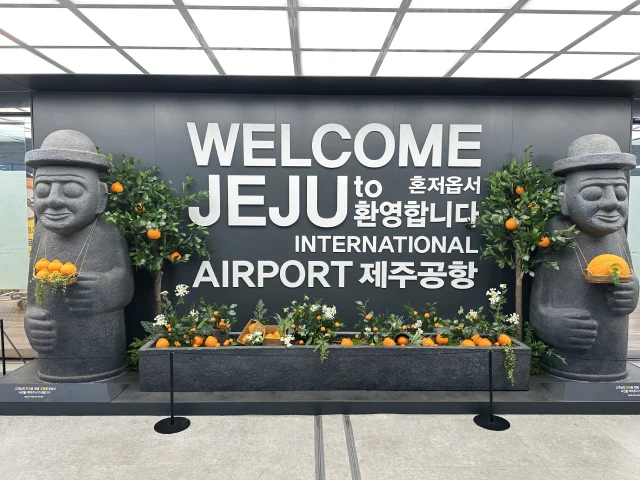
Our first stop after arriving was picking up our rental car from Lotte Rent-A-Car. Jeju is much larger than many people expect, and renting a car gives you the flexibility to explore scenic coastal roads, hidden gems, and cafés at your own pace.
Lunch at 외도가마솥밥
Before starting our sightseeing, we stopped for lunch at a cozy local restaurant serving authentic Korean home-style food.
We ordered dolsot bibimbap (rice mixed with vegetables in a sizzling hot stone pot) and fried mackerel. The meal also came with a variety of side dishes, which is typical in Korea. Every Korean meal feels like a full experience, and it was the perfect way to start our first day on the island.
Iho Tewoo Beach
Iho Tewoo Beach is a peaceful beach located just 15 minutes from Jeju Airport. It’s known for its soft sand and iconic horse-shaped lighthouses.
It was a bit windy when we arrived, but the weather was still pleasant for a relaxing walk along the shore. One of the most unique features here is the pair of horse-shaped lighthouses — one red and one white. These represent Jeju’s horse culture, as horses have historically been an important part of the island.
The beach had a calm and peaceful atmosphere, which made it a great introduction to Jeju’s natural beauty.
Dodu Rainbow Coastal Road
Dodu Rainbow Coastal Road is a scenic coastal road famous for its colorful rainbow-painted concrete wave breakers. This is one of Jeju’s most photogenic coastal spots and is very popular for photos, walks, and sunset views.
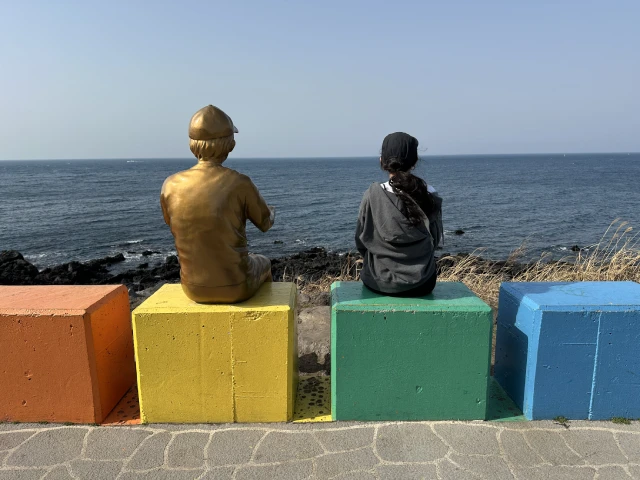
Seeing the colorful wave breakers against the deep blue ocean was beautiful. It’s a simple location, but the bright colors make it feel cheerful and unique. It’s also a nice place to take a short walk and enjoy the sea breeze.
Samseonghyeol
Samseonghyeol is a sacred historical site believed to be the birthplace of Jeju’s three legendary founding ancestors. It’s both culturally significant and one of Jeju’s hidden cherry blossom spots during spring.
One of the main reasons I visited Jeju in spring was to see cherry blossoms, and this was the first place where we spotted them. Seeing the delicate blossoms in such a peaceful, historic setting made the experience feel even more special.
We also saw hallabong trees nearby, which produce Jeju’s famous sweet tangerines.
Sinchang Windmill Coastal Road
Sinchang Windmill Coastal Road is a scenic coastal route known for its wind turbines and beautiful ocean views. It’s one of Jeju’s best hidden gems for sunset, offering a peaceful and scenic atmosphere away from crowds.
We stopped here on our way to our hotel in Seogwipo, and it turned out to be the perfect way to end our first day. Watching the sun slowly set behind the ocean while the wind turbines turned in the distance was incredibly calming. The combination of ocean views, golden light, and quiet surroundings made it one of my favorite moments of the day.
Our first day in Jeju was the perfect introduction to the island. From peaceful beaches and colorful coastal roads to our first cherry blossoms and a beautiful sunset, every stop gave us a glimpse of what makes Jeju so special. Exploring the northern coast at a relaxed pace helped us ease into the trip, and it made me even more excited for the days ahead.
Day 2: Waterfalls, Coastal Walks, Temples, and Scenic Cafés in South Jeju
Since we’re staying on the southern side of Jeju Island, today’s plan was to explore some of the most famous natural attractions, waterfalls, temples, and scenic coastal spots in South Jeju. This area is known for its dramatic cliffs, lush landscapes, and peaceful atmosphere, making it one of the most beautiful parts of the island.
Sonangmeori Coastal View
Sonangmeori is a quiet coastal observation area near Jeongbang Waterfall, offering scenic ocean views and peaceful walking paths. It’s a great hidden viewpoint where you can enjoy coastal scenery and seasonal cherry blossoms without large crowds.
Since the main parking lot near Jeongbang Waterfall was already full, we parked nearby and discovered this beautiful observation area by chance. As we walked through the park, we were greeted by soft pink cherry blossoms just beginning to bloom. Seeing the blossoms for the first time on this trip made me even more excited for the rest of our spring itinerary. The peaceful atmosphere and ocean views made this unexpected stop feel like a hidden gem.
Jeongbang Waterfall
Jeongbang Waterfall is one of Jeju’s most famous waterfalls and the only waterfall in South Korea that flows directly into the ocean. It’s one of the most unique natural attractions on the island, combining a powerful waterfall with beautiful coastal scenery.
As we walked down the stairs toward the waterfall, we could already see haenyeo — Jeju’s famous female free divers — gathering seafood from the ocean without oxygen tanks. Seeing them in person was such a special and memorable cultural experience.
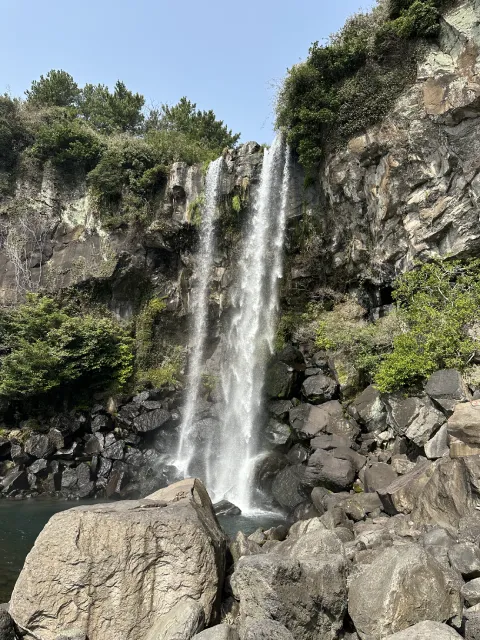
The waterfall itself was stunning. Standing 23 meters tall, watching the water crash directly into the ocean was both powerful and calming at the same time. Even though it was already quite busy, it still felt peaceful being surrounded by nature.
Cafe Gyulkkot Darak
A cozy and aesthetic tangerine-themed café known for its beautiful photo spots and Jeju-inspired drinks. Jeju is famous for its hallabong tangerines, and this café offers unique drinks and desserts made with this local specialty.
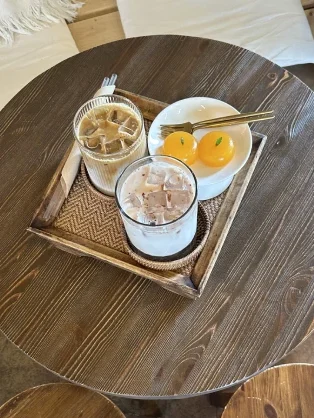
This café was absolutely beautiful, with a charming garden filled with tangerine trees outside. We ordered iced coffee, a tangerine latte, and tangerine yanggaeng, a traditional jelly dessert. Everything was delicious, and the peaceful garden setting made it the perfect place to relax after visiting the waterfall.
Sister Field Bakery
A popular bakery known for its freshly baked bread and cozy atmosphere. Perfect quick stop if you love bread, pastries, and cozy cafés.
As soon as we walked in, the smell of freshly baked bread was incredible. We picked up a few pastries, and they were just as good as they smelled. It was a simple but memorable stop.
Oedolgae
Oedolgae is a dramatic volcanic rock formation rising from the sea, surrounded by scenic coastal walking trails. It offers beautiful coastal views and peaceful walking paths, especially during spring.
Walking along the coastal trails here was one of my favorite experiences of the day. The ocean views were stunning, and the peaceful atmosphere made it feel incredibly relaxing. We even spotted cherry blossoms along the path, which made the walk even more magical.
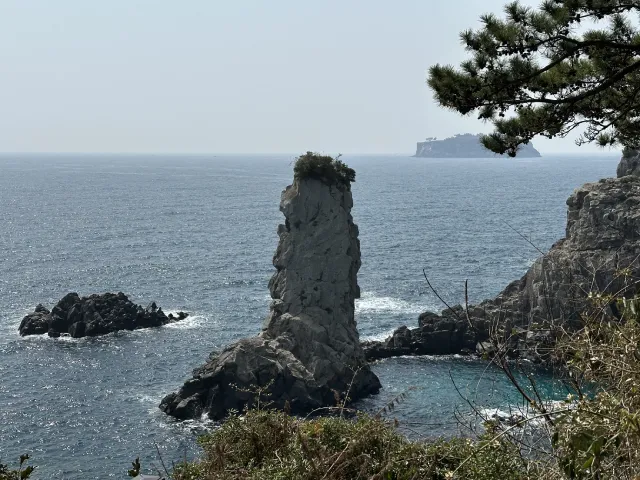
At the end of the trail, we reached a cliffside viewpoint overlooking the ocean — the views were absolutely breathtaking.
Yakcheonsa Temple
Yakcheonsa is one of the largest Buddhist temples in South Korea. It features impressive traditional architecture, colorful lanterns, and a peaceful atmosphere.
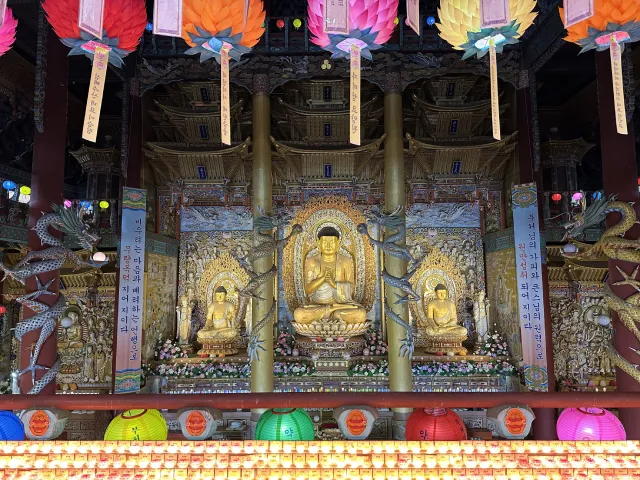
I was amazed by the size and beauty of the temple. The colorful lanterns, intricate ceiling patterns, and massive Buddha statue inside the main hall were incredible to see. The peaceful atmosphere made it a perfect place to slow down and appreciate the cultural side of Jeju.
Gamttanam Tangerine Farm Café
A tangerine farm café where visitors can pick fruit (seasonal) and enjoy Jeju-inspired drinks. It offers a unique Jeju experience centered around the island’s famous hallabong tangerines.
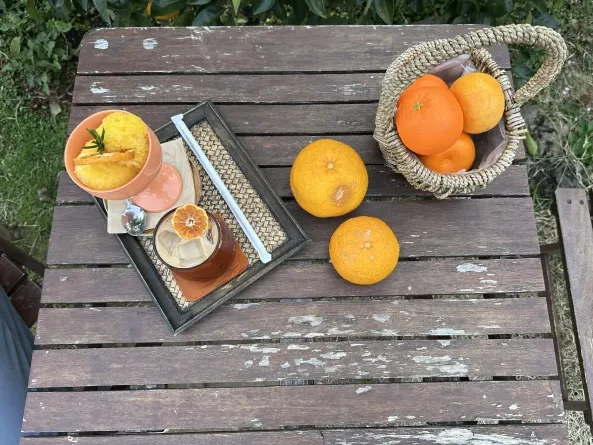
Although we didn’t do fruit picking, we relaxed at the café and tried their tangerine sorbet and tangerine coffee. Both were refreshing and delicious, especially after a long day of sightseeing.
Cheonjeyeon Waterfall
Cheonjeyeon Waterfall is a three-tier waterfall surrounded by forest trails. It offers scenic walking paths, waterfalls, and the famous Seonim Bridge.
We arrived just before closing and managed to explore the area. Although one of the three waterfalls had no water at the time, the surrounding nature was still beautiful. Walking across Seonim Bridge, decorated with carved figures, was one of the highlights.
Jungmun Saekdal Beach
Jungmun Saekdal Beach is a unique beach known for its multicolored sand and dramatic coastal scenery.
We stopped here just before sunset and enjoyed the cool ocean breeze. Even from the viewing area above, the scenery was stunning.
Dinner: Seogwipo Maeil Olle Market + Hannam Restaurant
We ended the day at Seogwipo Maeil Olle Market, a lively local market filled with street food and local specialties.
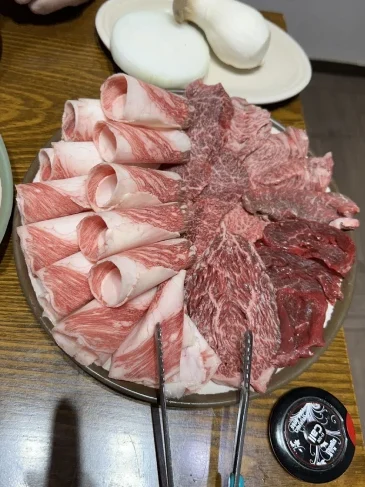
For dinner, we went to Hannam Restaurant and enjoyed Korean barbecue. Grilling fresh meat and enjoying a warm meal was the perfect way to end a full day of exploring South Jeju.
Day 2 was filled with some of Jeju’s most iconic natural and cultural attractions. From waterfalls flowing into the ocean and peaceful coastal walks to beautiful temples and cozy cafés, the south side of Jeju offered a perfect mix of nature and relaxation. Spring made everything even more special, with cherry blossoms beginning to bloom and cool, comfortable weather throughout the day.
Day 3: Seongsan Ilchulbong, Canola Fields, and Beaches in East Jeju
For Day 3 we explored East Jeju, one of the most scenic parts of Jeju Island. This region is famous for its volcanic landscapes, dramatic coastline, peaceful beaches, and beautiful canola flower fields during spring. It was one of the days I had been looking forward to the most, especially because we would finally hike the iconic Seongsan Ilchulbong.
Seongsan Ilchulbong (Sunrise Peak)
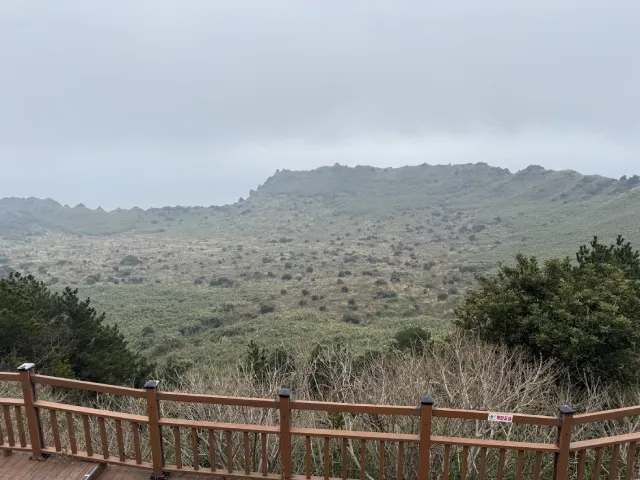
Seongsan Ilchulbong, also known as Sunrise Peak, is one of Jeju’s most famous landmarks and a UNESCO World Heritage Site. It’s a volcanic crater formed over 5,000 years ago by a hydrovolcanic eruption. It offers one of the most rewarding hikes in Jeju, with panoramic views of the ocean, surrounding villages, and the massive volcanic crater at the summit.
When we arrived, the sun was already up and there were quite a few visitors, including local tour groups and students on a field trip. The first part of the trail was relatively easy, with a gentle incline. The cool and slightly foggy weather actually made the hike more comfortable.
Halfway up, we reached an observation deck where we could already see incredible views of the coastline and village below. From there, the trail became steeper, turning into stairs leading up to the crater.
At the top, the view was absolutely worth it. Seeing the massive crater surrounded by ocean views felt surreal. It was quite cold and windy at the summit, so we rested briefly before heading down the other side.
At the base, we also saw the area where haenyeo divers perform cultural shows in the afternoon. Although we didn’t see the performance, it was still interesting to see this important part of Jeju’s culture.
Orrrn Café
A modern and spacious café near Seongsan Ilchulbong with beautiful views and aesthetic interiors. Perfect place to relax and recharge after hiking, with views of Sunrise Peak and seasonal flowers.
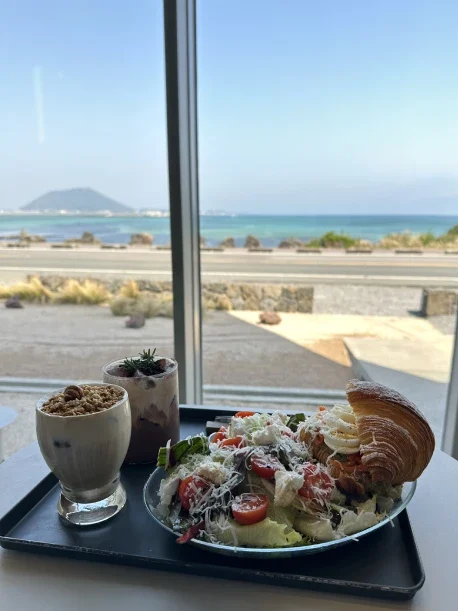
After the hike, we were starving, so we stopped here for breakfast. The café has two floors, and the balcony offers a beautiful view of Seongsan Ilchulbong and the ocean. Behind the café, we found canola flowers in full bloom, which made the stop even more special.
Seongsan Canola Flower Fields
Seasonal flower fields near Seongsan Ilchulbong filled with bright yellow canola flowers during spring. Spring is the best time to see Jeju’s famous canola flowers, and this area offers one of the most iconic views with Seongsan Ilchulbong in the background.
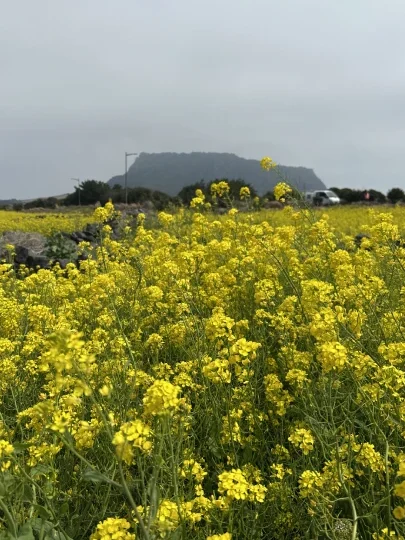
As we continued driving, we saw endless fields of bright yellow canola flowers. We stopped to take photos, and seeing the flowers with Seongsan Ilchulbong rising behind them was absolutely beautiful. It’s one of the most iconic spring scenes in Jeju.
Gwangchigi Beach
Gwangchigi Beach is a volcanic beach known for its unique black lava rock formations. It offers dramatic coastal scenery and peaceful views, especially during low tide.
This beach felt quiet and peaceful, with unique volcanic rocks and wide ocean views. It’s not a typical swimming beach, but the scenery made it worth visiting.
Seopjikoji
Seopjikoji is a scenic coastal cape known for its cliffs, walking trails, and lighthouse views. One of Jeju’s most romantic and scenic coastal walks.
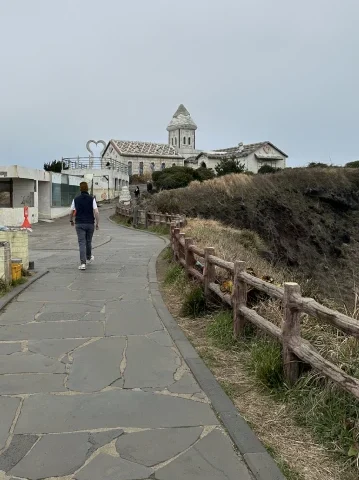
The weather was still cloudy and cool, which made the walk very comfortable. The trail was easy and mostly flat. From the path, we could see a white lighthouse on top of the hill and stunning coastal views in every direction.
Nearby, we also spotted Sinyang Beach, where people were windsurfing. Watching them made the whole place feel lively and energetic.
Woljeongri Beach
Woljeongri Beach is known for its clear turquoise water, white sand, and aesthetic cafés nearby. One of the most beautiful and photogenic beaches in Jeju.
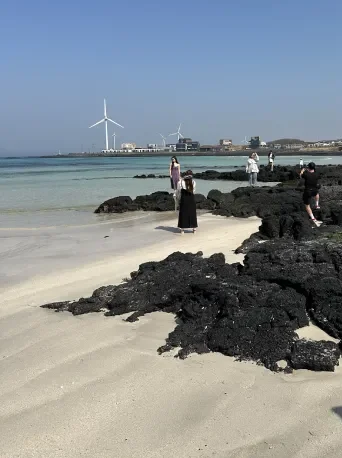
By the time we arrived, the sky had cleared up, making the water look even more vibrant. The beach felt calm and relaxing, and it was hard to leave.
Gimnyeong Beach
Gimnyeong Beach is a quieter beach known for its clear, shallow water. Less crowded alternative to more popular beaches.
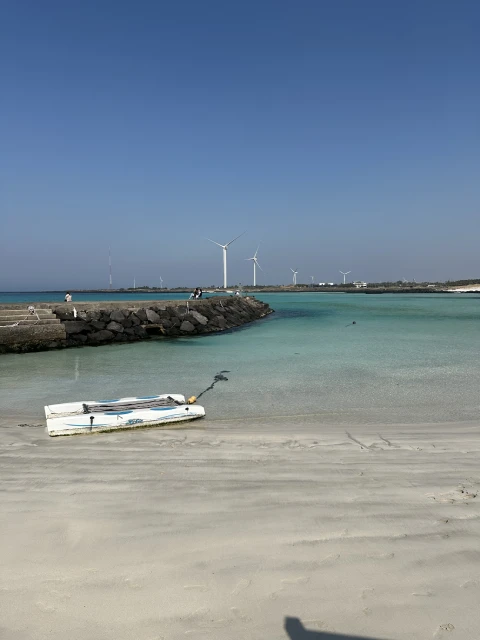
This beach felt peaceful and less touristy. The water was crystal clear, and the relaxed atmosphere made it feel like a hidden gem.
Hamdeok Beach
Hamdeok Beach is one of Jeju’s most famous beaches, known for its emerald-colored water. One of the most beautiful beaches on the island.
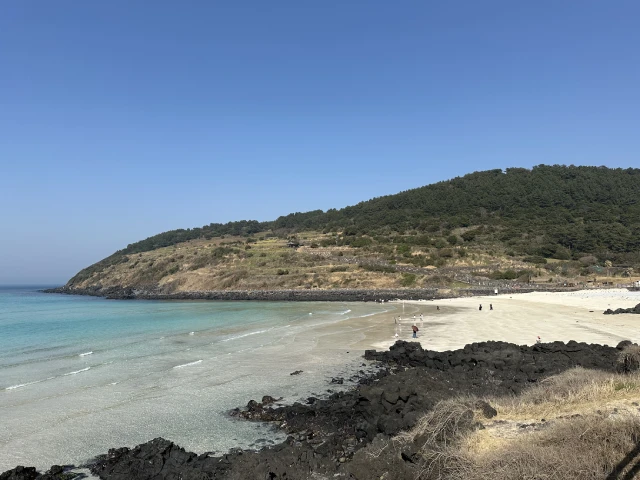
This beach felt peaceful and less touristy. The water was crystal clear, and the relaxed atmosphere made it feel like a hidden gem.
Jeju Stone Park
Jeju Stone Park is a cultural park and museum dedicated to Jeju’s volcanic history and stone heritage. It combines nature, culture, and peaceful walking trails.
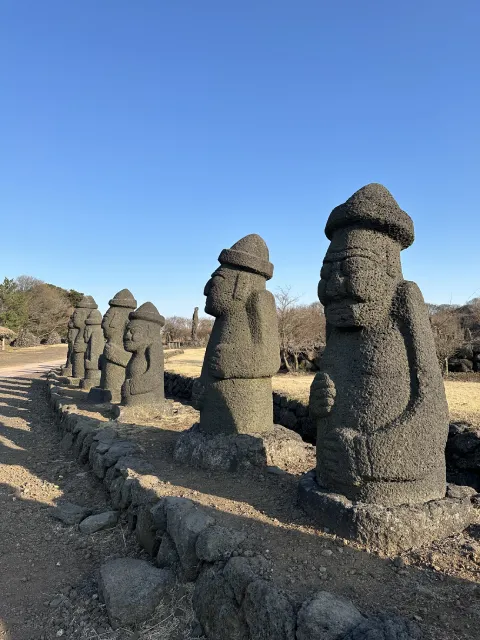
We started inside the museum, then explored the outdoor park filled with stone sculptures and beautiful landscapes. It felt peaceful and educational at the same time.
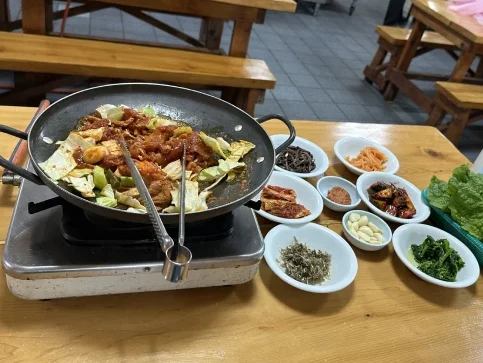
Dinner Near Seongeup Folk Village
We originally planned to visit Seongeup Folk Village, a preserved traditional village, but heavy rain forced us to change plans.
Instead, we had dinner at a nearby restaurant and ordered bulgogi, which came with many delicious side dishes. It was the perfect warm meal after a long day of exploring.
Day 3 was one of the highlights of my Jeju Island spring itinerary. Hiking Seongsan Ilchulbong, seeing the canola flower fields, and visiting some of Jeju’s most beautiful beaches made this day unforgettable. East Jeju offers a perfect mix of adventure, nature, and peaceful coastal scenery, especially during spring.
Day 4 – WEST JEJU: Rainy Day Edition
It’s gloomy and rainy today. We originally planned to explore Southwest Jeju (mostly outdoors), so we switched up our itinerary.
Jeju Bom Museum Stay
A boutique hotel combined with a small contemporary art museum. The property features curated exhibitions and outdoor art installations scattered throughout the grounds. It’s not just a place to sleep — it’s an experience. If you enjoy art, quiet surroundings, and unique accommodations, this stay feels intimate and inspiring. Guests get free museum entry.
We stayed here for 3 nights and we’re moving to the another hotel today. Since it was raining and we were checking out anyway, we explored the museum before leaving. There were only two exhibitions during our visit, both focused on contemporary Korean artists. The space felt calm, minimal, and thoughtfully curated — the perfect slow start to a rainy morning.
Jusangjeolli Cliff
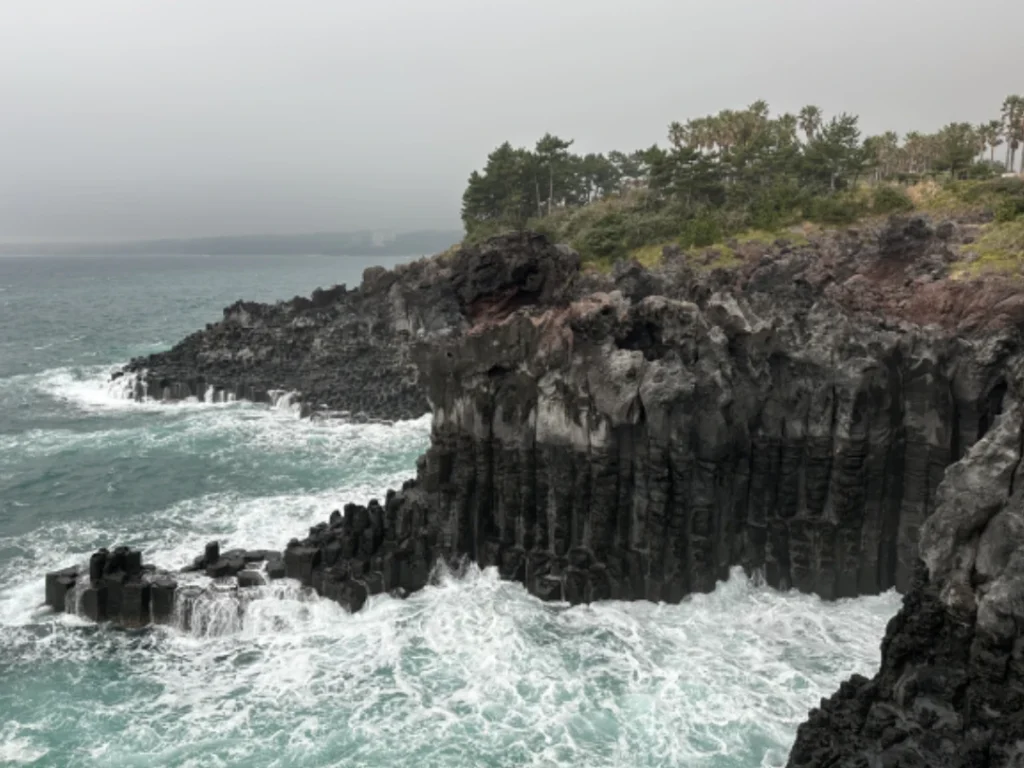
A dramatic coastal formation of hexagonal basalt columns created when lava from Hallasan cooled rapidly upon meeting the sea. It’s one of Jeju’s most fascinating geological sights. The perfectly shaped rock pillars almost look man-made, but they’re entirely natural.
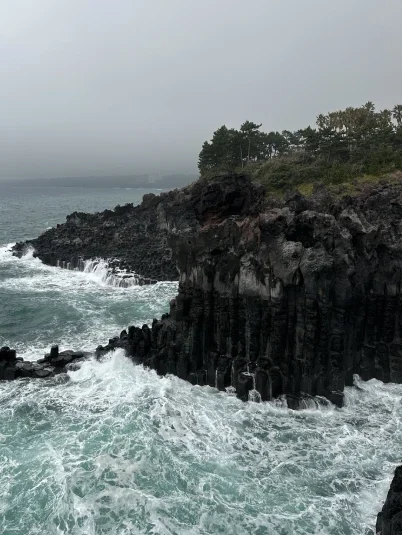
The rain briefly paused, so we rushed over — but it was incredibly windy! The gray skies actually made the cliffs look even more dramatic. Watching the waves crash against those stone columns felt powerful and cinematic.
Osulloc Tea Museum
A tea museum dedicated to Korea’s tea culture, showcasing green tea grown on Jeju Island. It’s a perfect indoor stop on a rainy day. You can learn about tea history, browse beautifully packaged products, and enjoy green tea desserts.
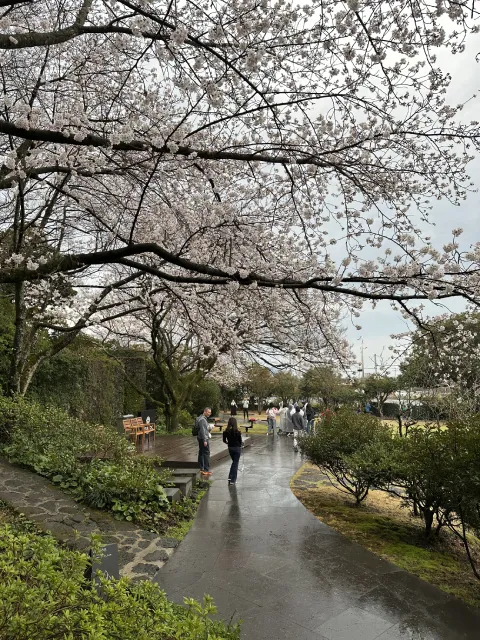
When the rain started pouring again, this was our cozy escape. The museum wasn’t overly crowded, and the scent of green tea made everything feel warm and comforting. It was such a relaxing pause in the middle of a stormy day.
Innisfree Jeju House
A café and lifestyle space by Innisfree, a Korean skincare brand known for using Jeju-sourced natural ingredients. It offers scenic countryside views, a peaceful café atmosphere, and beautifully presented food and desserts.
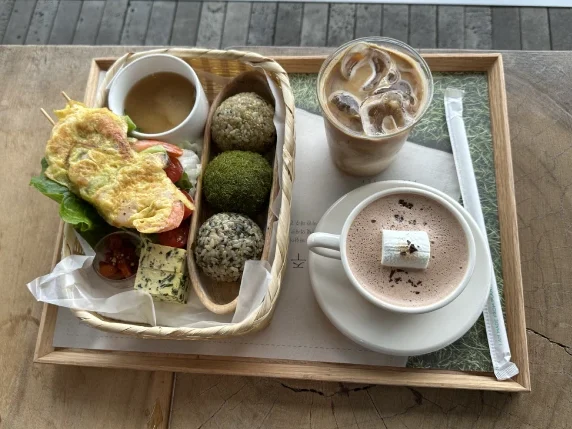
We stopped here for brunch and ordered their brunch basket — sticky rice balls, cheese, salad, and omelette. The rice balls were surprisingly delicious. Since the weather still wasn’t great, we treated ourselves to their “mountain cake” for dessert. When the rain paused, we stepped outside to enjoy the view of the fields and cherry blossoms just starting to bloom.
Tropical Hideaway
A cozy boutique hotel in West Jeju with a simple, stylish design. It’s a quiet, relaxing base if you’re exploring this side of the island — especially ideal for couples or travelers looking for a calm atmosphere.
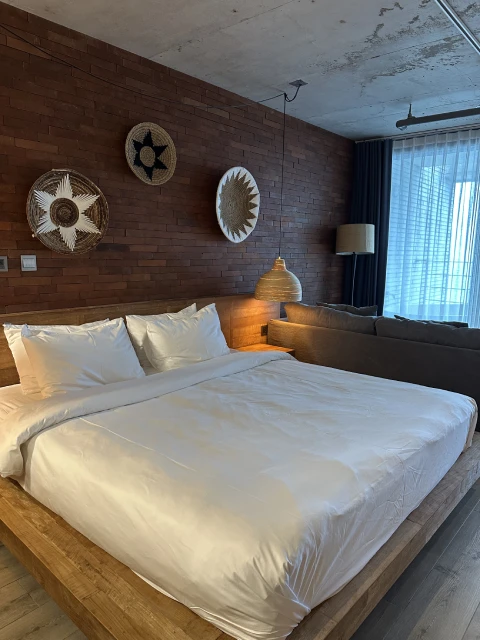
We checked in during the afternoon rain. The room was minimal but thoughtfully designed, and the misty view from our window made everything feel extra peaceful.
Sanbangsan & Sanbanggulsa
Sanbangsan is a distinctive dome-shaped volcanic mountain. Sanbanggulsa is a small temple carved into a cave on the mountainside. At the base sits Bomunsa Temple, a quieter Buddhist temple complex.
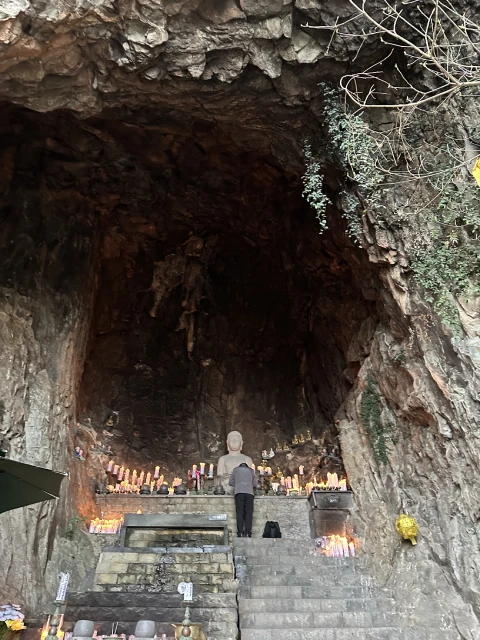
This area combines nature, spirituality, and coastal views. The cave temple is unique, and the spring water inside is believed to have healing properties.
We braved the drizzle and climbed the many steps up to Sanbanggulsa. It was misty and quiet — almost mystical. The ocean view from above was partially hidden by fog, which somehow made it feel even more magical. At the base of the mountain, bright yellow canola flowers were in full bloom, adding a cheerful contrast to the gray sky.
Dinner & Pool Night
An unexpected cozy ending at our hotel restaurant and indoor swimming pool. Sometimes the best travel moments aren’t planned.
We had intended to try a local restaurant, but most places nearby had already closed. So we dined at our hotel — and we were the only guests there. After dinner, we went up to the indoor swimming pool on the top floor. Swimming while listening to the rain outside was such a peaceful way to end the day.

Even though this wasn’t the sunny West Jeju we had imagined, it turned into a calm, cozy, and surprisingly beautiful day. Sometimes, the rain changes your plans — but it also gives you a completely different kind of magic.
Day 5 – Jeju’s Cherry Blossom Finale
It’s our last day in Jeju and we started with breakfast at the hotel. The air was still chilly (which I actually love), and the sky slowly began to clear. We decided to explore the northwest side of the island for our grand spring finale.
Sanbangsan Canola Fields
Seasonal canola flower fields surrounding Sanbangsan, especially vibrant in early to mid-spring. The contrast of bright yellow canola flowers against Sanbangsan’s dramatic volcanic dome creates one of Jeju’s most iconic spring landscapes.
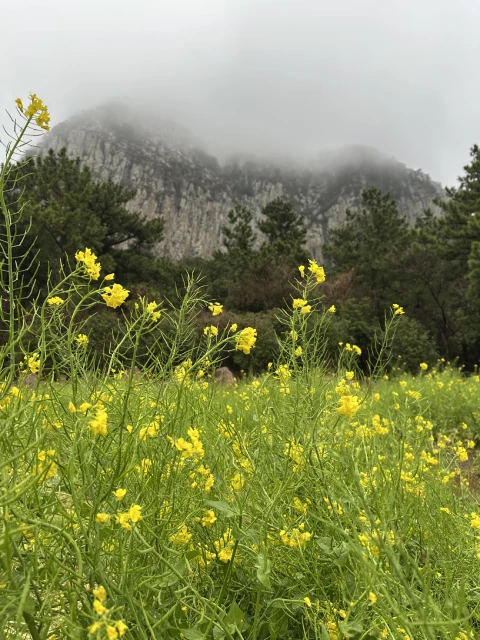
As the clouds began to lift, the yellow fields looked even brighter under the soft morning light. The mountain backdrop made everything feel cinematic. It was the perfect peaceful start to our final day.
Hallim Park
One of Jeju’s most famous botanical parks, spanning over 80,000 square meters with themed gardens, lava caves, tropical greenhouses, and seasonal flower displays. It offers incredible variety in one location — palm trees, cherry blossoms, tulips, peacocks, stone sculptures, and even lava caves. It feels like stepping into multiple climates in a single park.
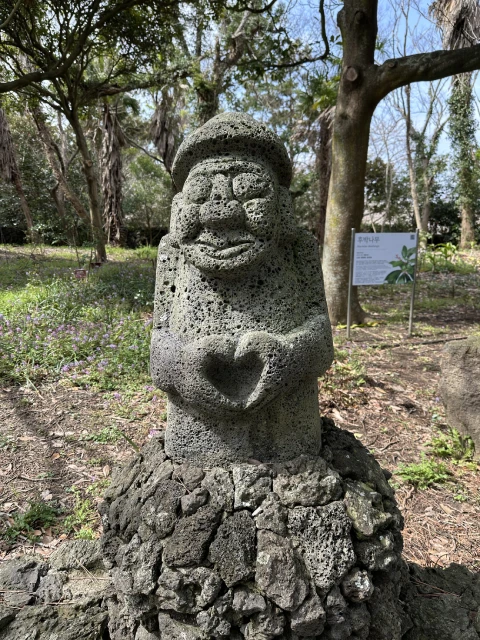
The park follows a designated walking route, which makes exploring easy despite its size. The palm trees were towering and tropical. The tulip garden was bursting with color. A peacock even fanned its feathers right in front of us.
When we reached the cherry blossom zone, the trees were about 50% in bloom. Not full bloom yet, but still magical.
Before leaving, we explored the greenhouse filled with cacti and tropical plants — a warm contrast to the cool spring air outside.
Geumneung Beach
A wide sandy beach known for its shallow, turquoise waters. It’s peaceful, less crowded than some other Jeju beaches, and offers beautiful coastal views — especially on clear days.
The water looked unbelievably clear and calm. Even though it was still chilly, the beach felt serene and refreshing. It’s the kind of place where you just want to sit and breathe.
Aewol The Sunset
A seaside café in Aewol known for its ocean views — especially popular at sunset. Relaxing coastal vibes, large windows, and great photo spots. Even during the day, the views are calming.
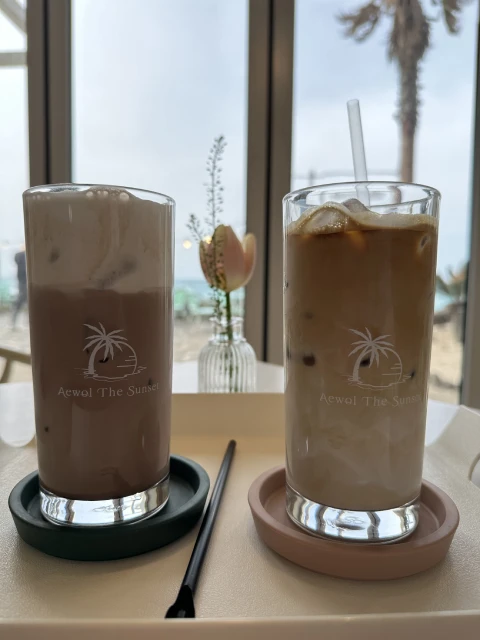
We enjoyed the outdoor seating first, soaking in the ocean breeze. Then we moved indoors for drinks and a proper rest. It felt nice to slow down and reflect on our trip.
Aewol High School Cherry Blossoms
A local high school area where cherry trees bloom along the road during spring.
We weren’t even planning to stop — but seeing early blossoms lining the road felt like a sweet little surprise.
Cherry Blossom Tunnel Road
A seasonal road lined with King Cherry trees that form a tunnel of pinkish-white blossoms. During peak season, the road closes to cars for pedestrians.
At last — full bloom! The petals formed the perfect tunnel overhead. People were strolling slowly, taking photos, and just enjoying the moment. At the end, we even found a smaller cherry blossom tunnel all to ourselves. It felt like a dream.
Jeju Sports Complex Cherry Blossom Road
A large sports complex area in Jeju City with roads and surrounding greenery lined with cherry blossom trees. One of the most impressive cherry blossom viewing spots in Jeju, especially when trees are in peak bloom.
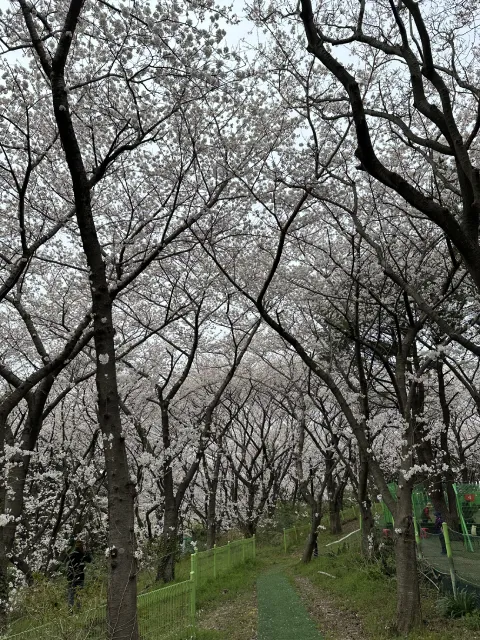
I honestly couldn’t believe how beautiful it was. The roads were lined in soft pink and white. We wandered into a small forested area where the blossoms were at their peak. From a nearby bridge, we could see the entire area blanketed in spring colors — it was breathtaking.
Dinner – An Unexpected Find
A cozy local restaurant we stumbled into by accident while craving seafood soup. Sometimes unplanned meals turn out to be the best ones.
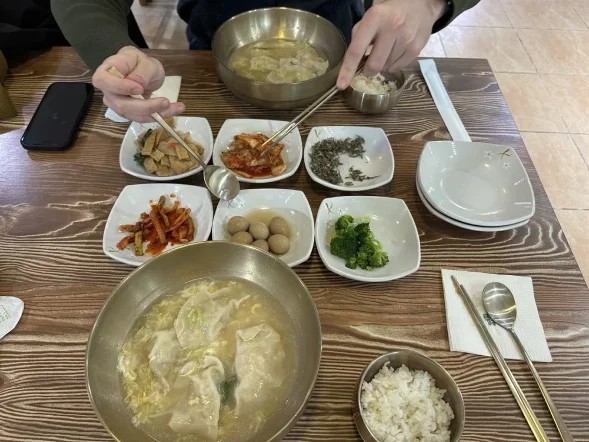
The menu had no English, so we translated everything carefully. We ended up ordering dumpling soup. I even saw the owner shaping the dumplings by hand. The soup was warm, comforting, and packed with flavor — exactly what we needed on a chilly evening.
Caffè Pascucci – Dessert Stop
An Italian coffee chain with locations across Korea. Reliable desserts and a cozy atmosphere for a sweet ending.
We shared a slice of cake, and I ordered omija tea — a traditional Korean tea made from five-flavor berries. It’s sweet, sour, and floral all at once — my favorite. It felt like the perfect closing treat.
Jeju National University Cherry Blossom Road
The road in front of Jeju National University, lined with cherry trees that bloom beautifully in spring. A peaceful, less touristy blossom spot that feels local and authentic.
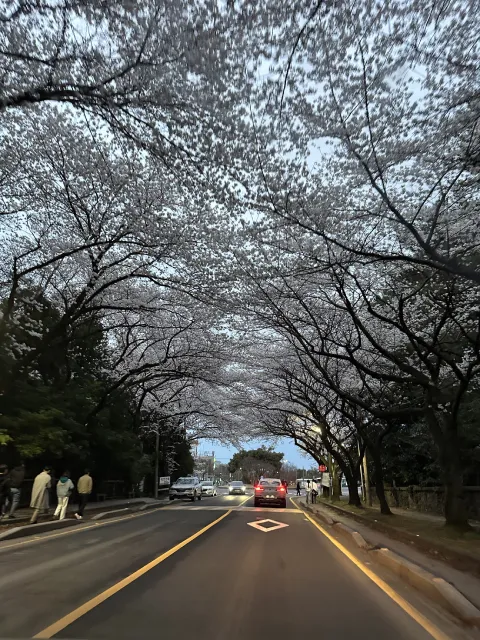
As we drove past, the trees were fully in bloom. Soft pink petals lined the road — it truly felt like the perfect grand finale to our Jeju trip.
From canola fields to tropical gardens to full-bloom cherry blossom tunnels — Day 5 felt like Jeju’s spring putting on one last show just for us. Ending our trip surrounded by pink petals and cool spring air felt like the most beautiful goodbye.
Travel Tips for Visiting Jeju Island in Spring
Spring is one of the most beautiful seasons to visit Jeju Island. With cherry blossoms, canola flowers, cool breezes, and fewer crowds than peak summer, it’s an ideal time for a scenic getaway. Here’s a practical guide to help you plan.
Best Time to Visit
Spring in Jeju Island runs from late March to May.
- Late March – Early April: Cherry blossoms & canola flowers bloom
- Mid–Late April: Mild weather, fewer blossoms but great hiking conditions
- May: Warmer temperatures, lush greenery, fewer spring flower crowds
Temperatures usually range between 10–20°C (50–68°F). It can still feel chilly due to coastal winds, especially in the mornings and evenings.
If your priority is flowers → aim for late March to early April. If you prefer comfortable hiking weather → mid to late April is perfect.
Cherry Blossom Timing
Jeju’s cherry blossoms typically bloom earlier than mainland Korea.
- Bloom forecast: Around late March
- Peak bloom: Usually lasts about 5–7 days
- Weather can shift timing slightly each year.
Jeju is famous for its King Cherry Blossoms, which have larger, fuller petals than standard varieties.
⚠️ Important: Bloom timing depends heavily on temperature — check local forecasts 1–2 weeks before your trip.
How to Get Around Jeju Island
Jeju is much bigger than many travelers expect.
Best Option: Rent a Car
Public transportation exists but can be slow, infrequent in rural areas, and inconvenient for scenic coastal stops. Many of Jeju’s most beautiful places (flower fields, beaches, mountain areas) are easier to access by car.
Alternatives:
- Taxis (can get expensive for full-day trips)
- Bus system (budget-friendly but time-consuming)
- Private day tours (good if you don’t want to drive)
For flexibility — self-driving is strongly recommended.
Car Rental Recommendations
Most visitors rent directly at Jeju International Airport. Major Korean rental companies operate at the airport, and the pickup process is generally smooth and organized.
Where to Stay
Your ideal base depends on your itinerary.
📍 Jeju City
Staying near Jeju City is convenient if you want quick access to blossom roads and urban amenities.
Best for:
- Short stays
- Cherry blossom viewing
- Easy airport access
- Dining & shopping
📍Seogwipo (South Jeju)
Seogwipo feels quieter and more scenic than Jeju City.
Best for:
- Waterfalls
- Scenic coastal cliffs
- Relaxed atmosphere
- Nature-focused itineraries
📍Aewol (West Jeju)
Aewol is perfect if you love slow mornings, café hopping, and seaside sunsets.
Best for:
- Ocean-view cafés
- Coastal drives
- Cherry blossom roads
- Relaxed, aesthetic vibe
Where I Stayed in Jeju
Here’s a breakdown of the two hotels I stayed at during my trip — why I chose them, what I loved, and a few honest pros and cons.
Jeju Bom Museum Stay
We wanted a unique, artsy start to our trip — and Jeju Bom Museum Stay delivered. This boutique hotel doubles as an art museum, so the entire property feels like a creative space rather than just a place to sleep.
Pros:
- Free museum access included with your stay
- Art installations scattered throughout the property — perfect for photos
- Stylish and unique design that fits Jeju’s creative vibe
- Great rainy-day activity if the weather doesn’t cooperate
Cons:
- Not as centrally located as big city hotels — best if you have a car
- Exhibits change seasonally — sometimes fewer installations if off-season
- Fewer on-site dining options than larger hotels
Perfect for: travelers who love boutique stays, art lovers, and anyone who wants photogenic hotel moments.
Tropical Hideaway
After our museum stay, we wanted a cozy, serene spot in West Jeju — especially to unwind after long days exploring the island.
Pros:
- Quiet, peaceful atmosphere
- Calm views from the room — especially relaxing on rainy days
- Indoor pool for chilling after sightseeing
- On-site dinner option when nearby places close early
Cons:
- Limited nearby restaurant options — many close early
- Not ideal for travelers who want downtown energy or nightlife
- Smaller property — not a “resort” experience
Tropical Hideaway is perfect for: couples, slow travel days, and rainy weather.
Recommended Hotels
Here are a few well-rated hotels across different budgets that you might love:
High-End & Luxury Hotels
These are perfect for travelers who want extra comfort, scenic locations, or resort-style amenities.
- Grand Josun Jeju – Elegant stay with excellent service and easy access to Seogwipo sights.
- JW Marriott Jeju Resort & Spa – Highly rated luxury oceanfront resort with world-class facilities (great for honeymooners or splurges).
Mid-Range & Value Hotels
Great for travelers looking for comfort without breaking the bank.
- LOTTE HOTEL JEJU – A classic choice with great service and central convenience.
- The Seaes Hotel & Resort – Stylish resort near Jungmun with stunning coastal vistas.
- Mercure Ambassador Jeju – High guest rating and comfortable rooms near Seogwipo.
Budget & Friendly Hotels
Excellent for cost-conscious travelers who still want comfort and good reviews.
- LOTTE City Hotel Jeju Airport – Good balance of price, comfort, and accessibility.
- Dyne Oceano Hotel – Aewol option near cafés and coastline — great for spring café hopping.
- Hidden Cliff Hotel & Nature – Nature-themed stay with strong reviews.
What to Pack
Spring weather in Jeju can change quickly — sunshine one minute, wind the next.
Essentials:
- Light jacket or windbreaker
- Layered clothing (sweaters, long sleeves)
- Comfortable walking shoes (you’ll walk a lot)
- Sunglasses
- Small umbrella or compact raincoat
- Scarf (helpful on windy coastal cliffs)
Optional but Helpful:
- Portable phone charger
- Moisturizer (coastal winds can be drying)
- Motion sickness medication (roads around the island can be winding)
Bonus Spring Tips
- Canola flowers bloom around the same time as cherry blossoms.
- Winds can be strong near cliffs and beaches.
- Some rural restaurants close early.
- Sunset is typically around 6:30–7:30 PM in early spring.
- Always check attraction closing times — especially waterfalls and parks.
Spring in Jeju Island feels fresh, colorful, and peaceful. With the right timing, a rental car, and layered clothing, you’ll be able to enjoy everything from blossom tunnels to volcanic cliffs comfortably. If you plan it well, Jeju in spring might just become your favorite season to visit.
Conclusion: Is Jeju Island Worth Visiting in Spring?
Absolutely — Jeju Island is 100% worth visiting in spring. In fact, it was one of the most beautiful and memorable parts of my first trip to South Korea. Seeing cherry blossoms in full bloom all across the island felt magical, and the bright yellow canola fields created landscapes that were even more stunning in person than I had imagined. Spring gave the island a fresh, vibrant atmosphere that made every drive, walk, and stop along the way feel special.
One of my favorite experiences was hiking up Seongsan Ilchulbong. The hike was short but incredibly rewarding, with panoramic views of the ocean and coastline waiting at the top. Beyond that, I loved exploring Jeju’s coastal cliffs and peaceful beaches, where I could slow down, enjoy the fresh air, and take in the natural beauty around me. The weather was also perfect — cool, comfortable, and sunny enough to enjoy being outdoors all day without feeling too hot or exhausted.
Jeju is also a dream destination if you enjoy café culture and food. Some of the most memorable moments of my trip were spent relaxing in scenic ocean-view cafés, enjoying delicious local dishes, and simply taking in the calm, peaceful atmosphere that makes the island so unique.
Spring felt like the perfect time to follow a Jeju Island itinerary — fewer crowds, beautiful seasonal scenery, and ideal weather for exploring. Whether you’re visiting South Korea for the first time or returning to discover more, Jeju Island in spring offers a perfect mix of nature, relaxation, and unforgettable experiences. It’s a destination I would visit again without hesitation.
FAQ: Jeju Island Spring Itinerary
These frequently asked questions will help you plan your Jeju Island spring itinerary, especially if it’s your first time visiting.
1. Is spring a good time to follow a Jeju Island itinerary?
Yes, spring is one of the best times to visit Jeju Island. During this season, you can see cherry blossoms and bright yellow canola flowers in full bloom across the island. The weather is cool and comfortable, making it ideal for hiking, sightseeing, and exploring beaches and cafés. Spring is also less crowded compared to peak seasons like summer and autumn.
2. When is cherry blossom season in Jeju Island?
Cherry blossom season in Jeju Island usually occurs between late March and early April. The exact timing varies each year depending on the weather, but Jeju typically blooms earlier than mainland South Korea. Planning your Jeju Island spring itinerary around this period will give you the best chance to see the blossoms at their peak.
3. How many days do you need in Jeju Island?
Spending 4 to 5 days in Jeju Island is ideal for first-time visitors. This gives you enough time to explore different parts of the island, including beaches, coastal cliffs, cafés, waterfalls, and scenic spots like Seongsan Ilchulbong, without feeling rushed.
4. Do you need to rent a car in Jeju Island?
Yes, renting a car is highly recommended for your Jeju Island spring itinerary. Many of the island’s most beautiful locations are spread out, and public transportation can be limited and time-consuming. Having a car gives you the flexibility to explore at your own pace and visit hidden gems and scenic cafés more easily.
5. What is the weather like in Jeju Island in spring?
Spring weather in Jeju Island is usually cool and pleasant, with temperatures ranging from around 10°C to 20°C. It’s comfortable for outdoor activities like hiking, sightseeing, and walking along the coast. Bringing a light jacket is recommended, especially in the morning and evening.
6. What are the best things to do in Jeju Island in spring?
Some of the best things to include in your Jeju Island spring itinerary are:
• Seeing cherry blossoms and canola fields
• Hiking Seongsan Ilchulbong
• Visiting scenic beaches like Woljeongri Beach
• Exploring coastal cliffs and ocean viewpoints
• Visiting aesthetic ocean-view cafés
• Enjoying local Korean food
Spring is perfect for combining nature, relaxation, and sightseeing.
7. How do you get to Jeju Island from Seoul?
The fastest way to get to Jeju Island is by taking a domestic flight from Gimpo International Airport to Jeju International Airport. The flight takes about 1 hour. Many travellers arrive in South Korea via Incheon International Airport and then transfer to Gimpo Airport for their Jeju flight.
8. Is Jeju Island worth visiting for first-time visitors to South Korea?
Yes, Jeju Island is absolutely worth visiting, especially for first-time visitors. It offers a completely different experience from cities like Seoul, with beautiful nature, peaceful coastal scenery, unique cafés, and a relaxing atmosphere. Following a Jeju Island spring itinerary is a great way to experience one of South Korea’s most beautiful destinations.
Enjoyed this guide? Share it with a friend who’s planning their next adventure!
AUTHOR

Written by Princess — Helping first-time travelers explore the world stress-free.