4-Day Kyoto Itinerary: Complete Travel Guide + Nara Day Trip (First-Timer Friendly)
Walking through Kyoto feels like stepping into a living painting—one brushed with vermillion gates, mossy stone paths, and the soft scent of matcha drifting from hidden tea houses. After a scenic train ride from Kanazawa, I spent three full days uncovering the city’s quiet beauty: wandering through centuries-old temples at sunrise, pausing inside peaceful gardens, and watching golden pavilions glow under the afternoon sun.
But Kyoto’s magic lies beyond its temples. It’s in the small rhythms of the city—the gentle chants from wooden prayer halls, the crunch of gravel beneath your shoes, the warmth of a bowl of ramen after a long day. And just a short ride away, Nara adds its own charm: ancient shrines tucked beneath towering cedars, mossy lantern paths, and deer that bow politely for crackers.
This 4-day Kyoto itinerary with a Nara day trip blends storytelling and practicality, giving you a complete route filled with iconic highlights, hidden gems, food recommendations, and travel tips I learned firsthand. Whether you’re visiting for the first time or returning to discover deeper layers of Kyoto’s culture, this guide will help you explore at your own pace — savoring the moments that make Japan unforgettable.
Disclaimer: Some of the links in this post are affiliate links, which means I may earn a small commission — at no extra cost to you — if you make a purchase through them. You can read my full disclaimer here.
Planning your trip
How to Get to Kyoto
Kyoto doesn’t have its own commercial airport, but it’s incredibly well-connected by rail and bus. Your best entry point depends on where you’re coming from:
From Tokyo
- Shinkansen (Bullet Train):
- Take the Tokaido Shinkansen from Tokyo Station or Shinagawa Station to Kyoto Station.
- Nozomi trains are the fastest (about 2 hours 15 minutes). Hikari takes about 2 hours 40 minutes and is covered by the Japan Rail Pass.
- Highway Bus: Overnight buses cost less (from about ¥4,500) and take 7–9 hours.
From Osaka / Kansai International Airport (KIX)
- Airport Express “Haruka”: Direct from KIX to Kyoto Station in about 75 minutes.
- Airport Limousine Bus: Around 90 minutes, convenient if you have luggage.
From Other Cities
- From Nagoya: Tokaido Shinkansen in about 35 minutes.
- From Hiroshima: Nozomi Shinkansen for 1 hour and 35 minutes.
Where to Stay in Kyoto
Choose based on convenience and vibe:
- Central Kyoto (Downtown Kawaramachi): Close to shopping streets and buses—good base for first-timers.
- Gion/Higashiyama: Atmospheric, traditional machiya houses and easy access to temples.
- Kyoto Station Area: Best for easy train connections and value hotels.
- Arashiyama: Quiet, nature-rich vibe if you prefer mornings by the bamboo grove.
Popular picks: Cross Hotel Kyoto, Hotel The Celestine Kyoto Gion, Guesthouse An, or a traditional ryokan like Hiiragiya for tatami and kaiseki meals.
Getting Around Kyoto
- Buses & Subway: Kyoto City Bus + Subway One-Day Pass (¥1,100) covers most sites.
- IC Cards (ICOCA, Suica, Pasmo): Tap-and-go for buses, trains, and even convenience stores.
- Taxi/Go App: Handy at night or when buses are infrequent.
- Rental Bicycles: Flat terrain in central areas makes cycling easy; many hotels rent bikes.
Local Food & Café Recommendations
- Kyoto Kaiseki: Seasonal multi-course dining—try Gion Karyo or Gion Nanba.
- Shojin Ryori: Zen vegetarian cuisine at temple restaurants like Shigetsu (Tenryu-ji).
- Obanzai: Traditional Kyoto home-style dishes—check Kamo Tsuji.
- Matcha Sweets: Nakamura Tokichi, Saryo Tsujiri, or Itohkyuemon for parfaits.
- Ramen: Try it at Menbaka Fire Ramen.
- Coffee & Brunch: % Arabica Higashiyama, Weekenders Coffee, and Walden Woods Kyoto.
4-Day Kyoto Itinerary (with Nara Day trip)
Day 1 – Historic Higashiyama & Gion (Central & Eastern Kyoto)
Arriving in Kyoto From Kanazawa
A two-hour ride on the Thunderbird Limited Express from Kanazawa delivered us straight into the heart of Kyoto. (We used the Hokuriku 1-Day Pass from KKday—¥6,500—easy to swap for tickets at Kanazawa Station.)
After dropping our bags at the hotel, we began our slow wander through Higashiyama — one of Kyoto’s best-preserved historical districts, filled with narrow lanes, machiya townhouses, and centuries-old temples.
Zenkyo-an Temple – A Quiet Hidden Gem Near Kenninji
We thought we were heading to Kenninji, Kyoto’s oldest Zen temple, but happily stumbled into its quieter neighbour, Zenkyo-an. Little pig statues—symbols of good fortune—peeked from mossy corners. We even brought one home as a keepsake.
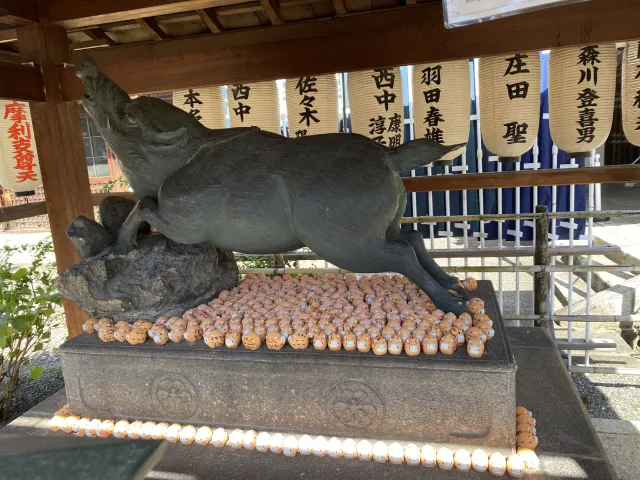
The temple grounds are small but soothing, framed by mossy stones, bamboo groves, and the faint scent of incense drifting from nearby halls. Compared to larger temples, Zenkyo-an offers a peaceful moment where you can hear your footsteps, your breath, and the soft rustle of leaves — a rare luxury in Kyoto.
Traveling Coffee Kyoto – Minimalist Café Stop in Gion
A short walk later, we rewarded ourselves with perfectly poured lattes in a tiny minimalist café. Kyoto is a city for walkers, so comfortable shoes are a must.
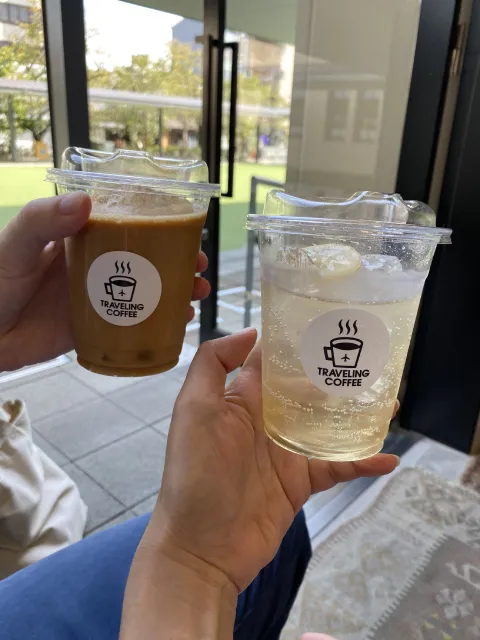
Located near the historic Gion area, Traveling Coffee is a minimalist café where white walls, warm wood accents, and curated playlists create a calming break from sightseeing. Their pourover coffees are made with locally roasted beans, and their iced lattes hit especially well on warm Kyoto afternoons.
Shirakawa Canal & Tatsumi Bridge – Kyoto’s Most Photogenic Lane
This narrow lane is a dream during cherry-blossom season, with petals drifting onto the canal. A stone monument nearby honours geisha poet Isamu Yoshii. In spring, cherry blossoms spill across the canal, creating dreamlike reflections.
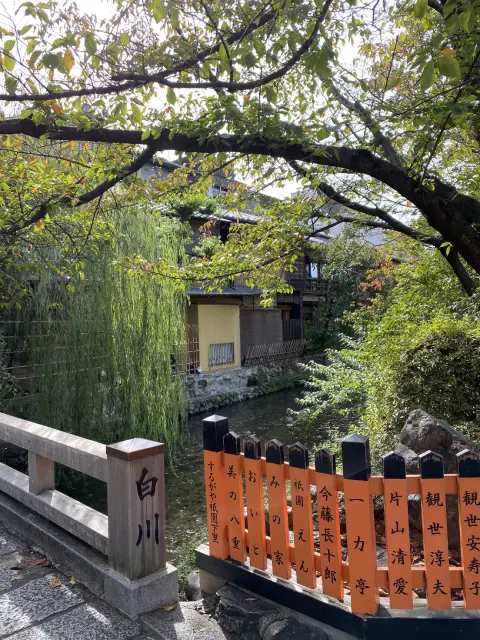
Tatsumi Bridge is one of Kyoto’s most photographed spots, often visited by geiko and maiko (geishas) on their way to evening appointments. It’s beautiful in daylight but absolutely magical at dusk, when lanterns glow and the water shimmers gold.
Yasaka Shrine – Gion’s Famous Lantern-Lit Sanctuary
Yasaka Shrine, also called the “Gion Shrine,” has been standing for over 1,350 years and plays a central role in Kyoto’s spiritual life. Famous for its lantern-lit stage that illuminates at night, Yasaka is a lively place where locals pray for good fortune, health, and safe travels.
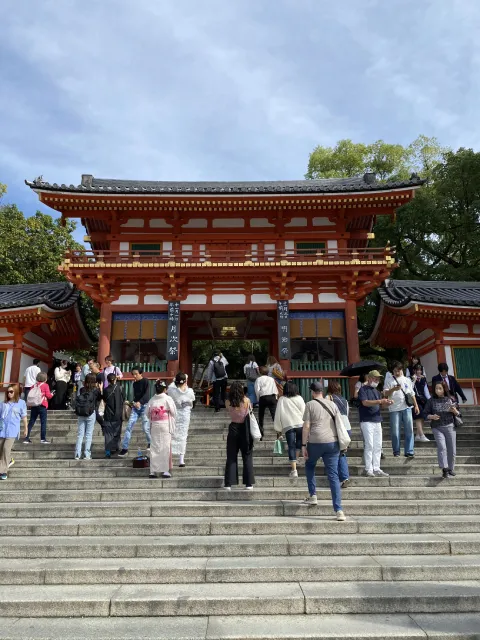
Maruyama Park
Kyoto’s oldest public park and the epicenter of cherry blossom celebrations. Its most famous resident is the enormous weeping cherry tree — a dramatic sculpture of cascading pink petals in spring. But beyond sakura season, Maruyama Park remains a refreshing escape with ponds, bridges, shaded walking paths, and benches perfect for people-watching.
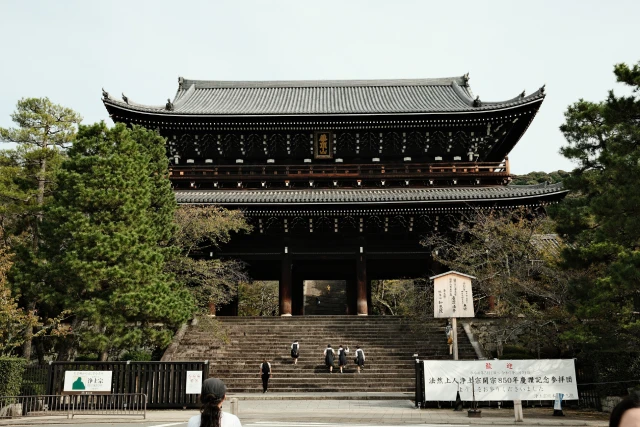
Chion-in Temple – Grand Staircase, Monk Chants & Giant Bell
We climbed the grand staircase (discovered the side path only on the way down!) and sat inside while monks chanted, the deep bell echoing through the hall.
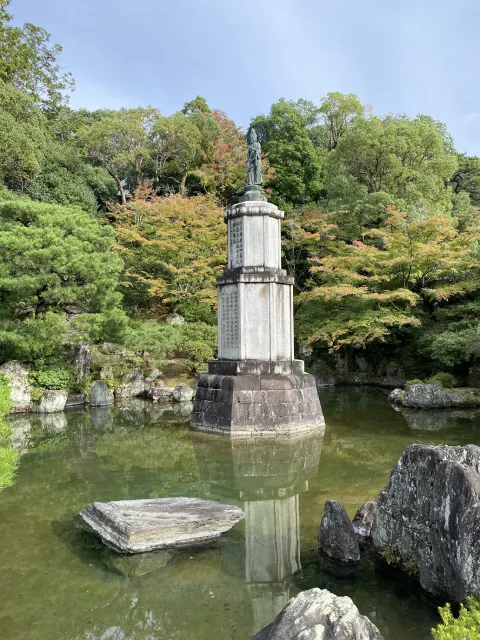
Yuzenen Garden – A Small Garden Inspired by Kimono Dye Art
Descending the hill we found this pocket-sized garden, patterned after the vivid dyes of Kyoto’s yuzen tradition.
Ninenzaka & Sannenzaka – Kyoto’s Traditional Shopping Streets
Storybook lanes lined with teahouses led us upward toward Kiyomizu-dera. These sloping streets feel like you’ve walked straight into the past. The traditional wooden buildings, pottery shops, tea houses, and souvenir stands make this one of Kyoto’s most charming areas.
The restored machiya houses preserve the ambiance of the Edo period, and small details — lanterns, stone steps, wooden façades — make every turn picture-perfect. Don’t miss a refreshing cucumber on a stick sold along the way.
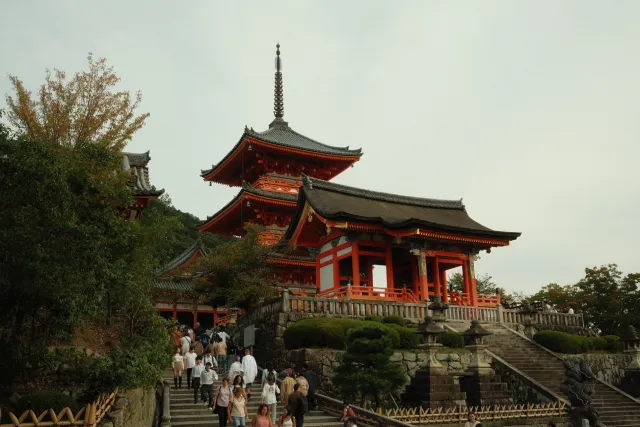
Kiyomizu-dera Temple – UNESCO Views Over Kyoto
One of Kyoto’s most iconic UNESCO sites, Kiyomizu-dera is famous for its giant wooden stage that juts out from the mountainside without a single nail. The view of the city from here is breathtaking, especially during sunset or autumn foliage season.
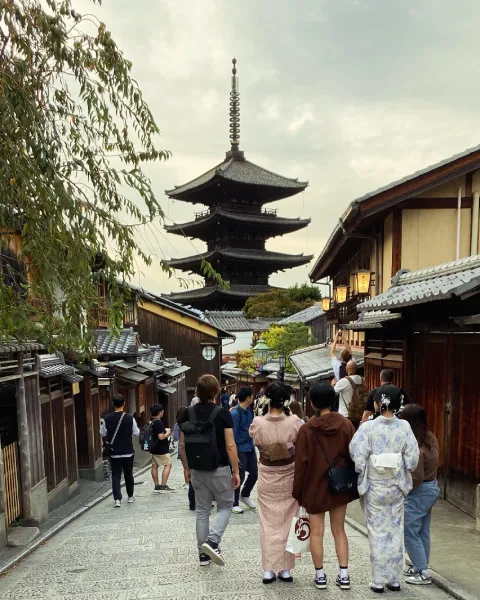
Yasaka Pagoda – Best Photography Spot in Higashiyama
Walking back down, we paused for the classic Kyoto shot of the five-story pagoda framed by old machiya houses. Arrive early morning or late afternoon for softer lighting and fewer people.
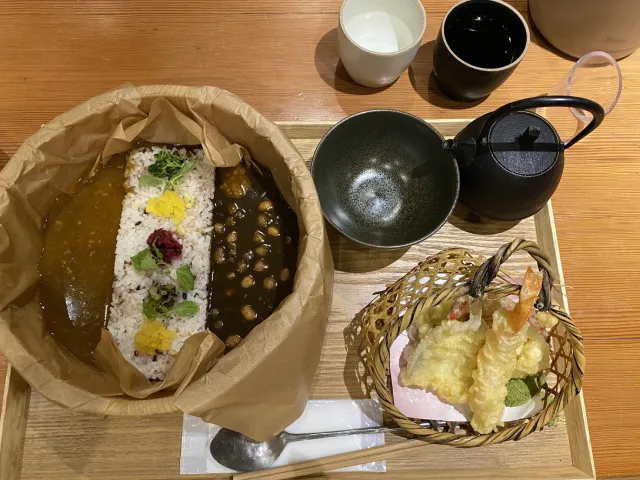
Dinner at Curry & Tempura Koisus – Kyoto Comfort Food
Crispy tempura over fragrant curry was the perfect end to our first Kyoto evening.
Day 2 – Arashiyama & Northwest Kyoto Highlights
We left early for Arashiyama, riding a train and local bus (a taxi via the Go app is another easy option).
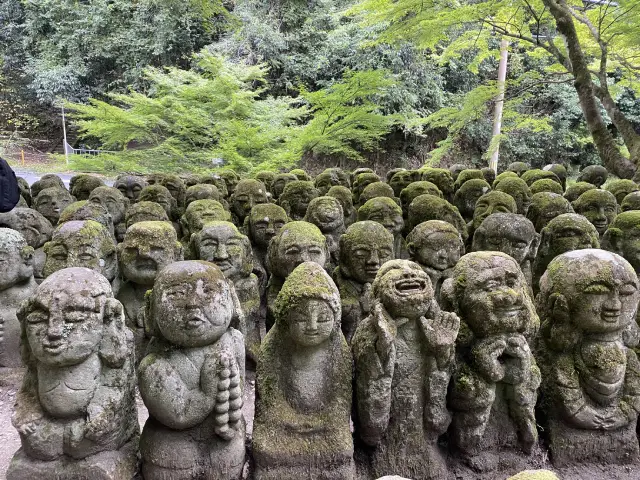
Otagi Nenbutsu-ji – 1,200 Mossy Rakan Statues
A hidden gem with 1,200 mossy rakan statues—each carved with a different expression. We wandered quietly, spotting playful faces and making a small wish.
Adashino Nenbutsu-ji – Stone Buddhas & Bamboo Grove Walk
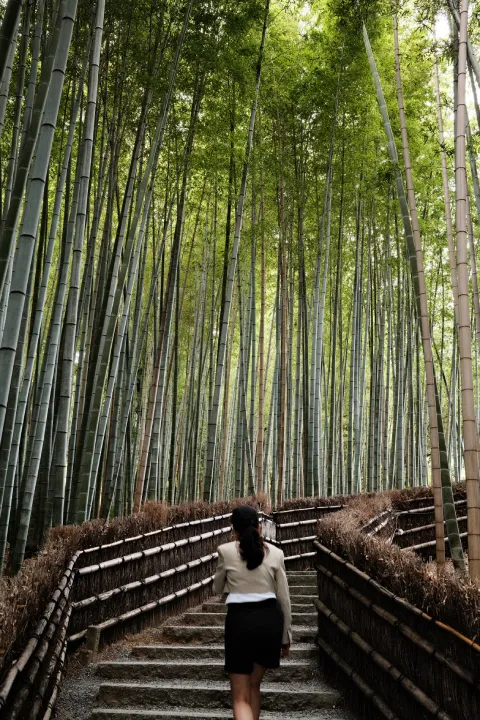
A gentle uphill walk brought us to this temple, surrounded by thousands of stone Buddhas and a serene, uncrowded bamboo grove—our peaceful alternative to the busy Arashiyama Bamboo Forest.
Nijō Castle – Home of the Famous Nightingale Floors
Back in the city, we explored this 1603 shogun residence, where the famous “nightingale floors” chirp softly to expose intruders. Outside, elegant gardens and moats surround the complex, making it easy to spend an hour or two wandering through history.
Kinkaku-ji (Golden Pavilion) – Kyoto’s Iconic Gold Temple
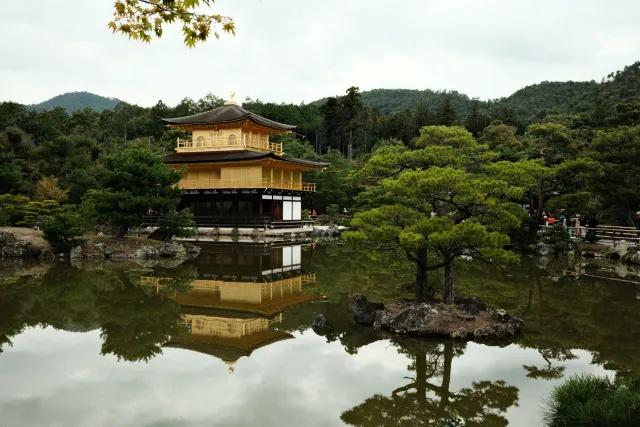
Perhaps Kyoto’s most iconic landmark, Kinkaku-ji is a Zen temple covered entirely in gold leaf, shimmering above a reflective pond. The temple was once a shogun’s retirement villa before being converted into a temple. Every angle of the pond offers a perfect postcard shot. Because it’s so popular, aim for opening time or late afternoon when the crowds thin and the light becomes soft and golden.
Traveler’s Factory Kyoto – Stationery & Travel Journaling Shop
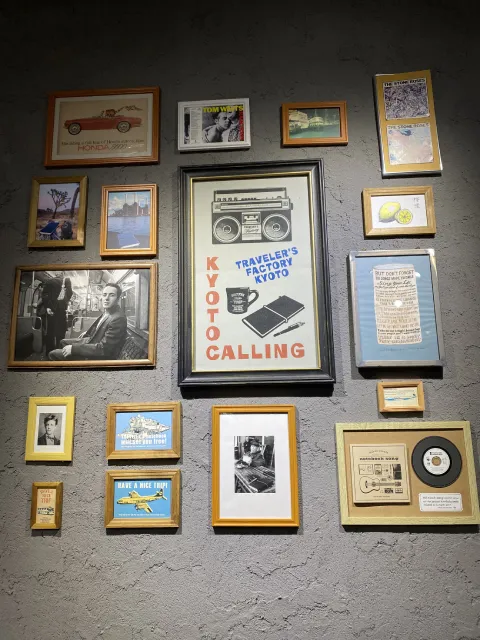
A paradise for stationery lovers, this shop offers exclusive Kyoto-themed stamps, notebooks, postcards, and travel journals. They have a stamping corner dedicated to travelers collecting unique footprints of their journey. It’s an excellent spot for souvenirs, especially lightweight ones.
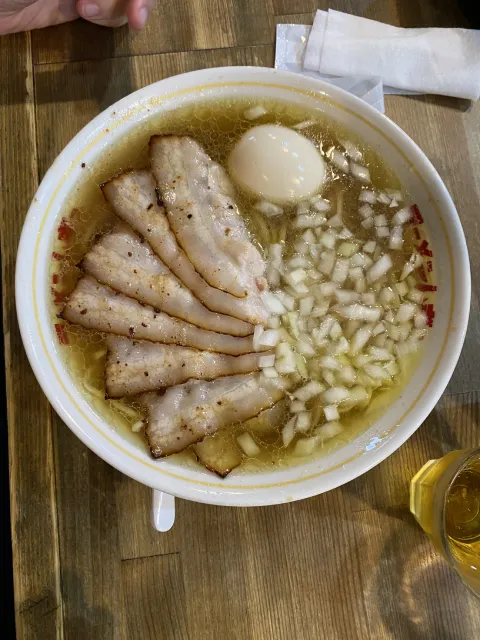
Dinner – Kyoto-Style Shoyu Ramen
We wrapped up the day with a comforting bowl of Kyoto-style shoyu ramen.
Day 3 – Fushimi Inari & Eastern Kyoto Temples
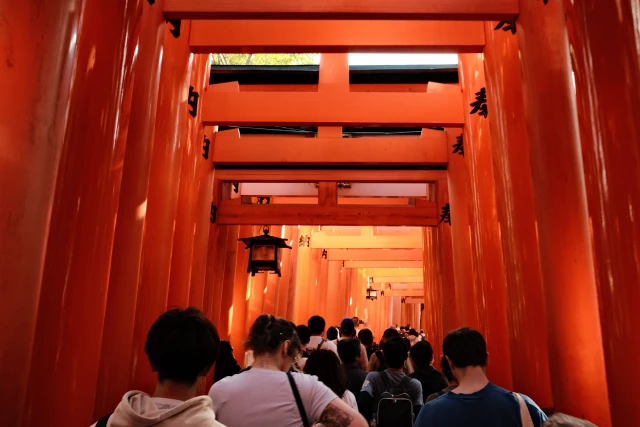
Fushimi Inari Taisha – Climbing Through 10,000 Torii Gates
We caught an early train, but the shrine already buzzed with visitors. As we climbed past thousands of vermillion torii gates, the crowds thinned and a quiet rhythm set in. At the summit we felt as if we’d earned our morning workout.
Eikandō Temple – Pagoda Views & the Looking-Back Buddha
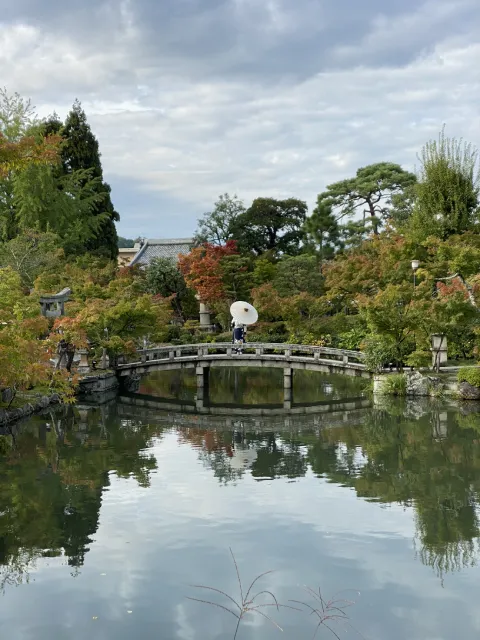
Later, a short bus ride brought us to Eikandō’s serene gardens. Eikandō is renowned for its breathtaking autumn foliage, but it’s beautiful year-round. The temple features a hillside pagoda with panoramic views over the city, serene lakes with koi fish, and peaceful wooden halls.
One of its most unique treasures is the statue of Amida Buddha looking over its shoulder, said to have turned during a sermon to guide a monk who arrived late — a symbol of compassion and welcome.
Kyoto Porta – Underground Dining at Kyoto Station
On our way back to the hotel, we passed through Kyoto Porta, an underground shopping and dining complex directly beneath Kyoto Station. It’s a convenient stop for travelers because you’ll find everything from grab-and-go snacks to sit-down restaurants clustered in one place.
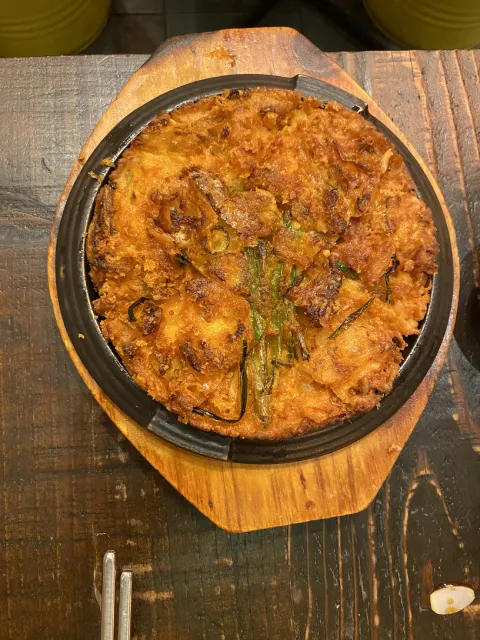
By the time we arrived, we were starving — and so was everyone else. Most restaurants had long lines, but we were lucky enough to find an open table in a cozy Korean eatery tucked inside the food hall. We ordered comforting Korean dishes that hit the spot after a full day of walking. Kyoto Porta is a great option if you’re staying near the station or need an easy meal after a long day of exploring.
More Kyoto Sights Worth Adding to Your List
If you have extra time (or simply want more ideas), these 10 spots are absolute standouts:
Gion District
Kyoto’s legendary geisha quarter with wooden machiya houses and tea houses.
Philosopher’s Path
A serene canal-side walk lined with cherry trees (must visit during cherry blossom season).
Heian Shrine & Garden
Grand torii gate and spacious landscaped gardens.
Kyoto Imperial Palace & Park
Former residence of Japan’s emperors, free to enter.
To-ji Temple
Home to Japan’s tallest wooden pagoda (five stories).
Ryoan-ji Temple
Famous for its minimalist Zen rock garden.
Nanzen-ji Temple & Aqueduct
Photogenic brick aqueduct and sprawling temple grounds.
Kyoto Railway Museum
Great for families and train enthusiasts.
Kyoto International Manga Museum
Massive manga library with English selections.
Kyoto Botanical Gardens
Seasonal flowers and a lovely conservatory.
Day 4 – Nara Day Trip From Kyoto
Forty-five minutes on the Kintetsu Line carried us to Nara, where ancient temples share the streets with free-roaming deer.
Higashimuki Shopping Street – Souvenirs & Local Snacks
Just outside the station, we browsed souvenirs and local snacks before heading toward the park.
Nara Park – Meeting the Bowing Deer
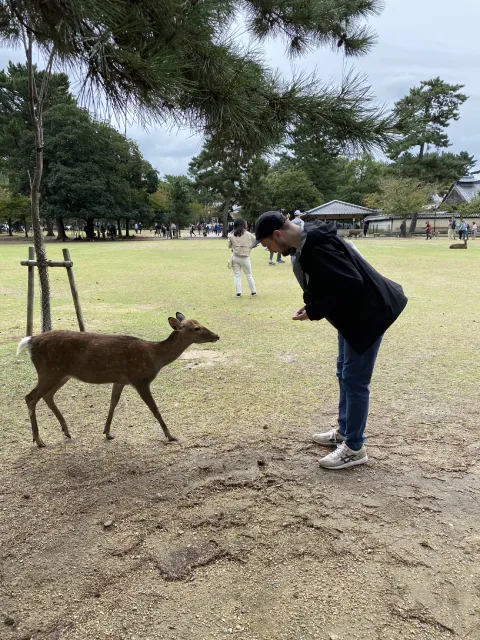
Home to over 1,000 free-roaming Sika deer, Nara Park is one of Japan’s most charming attractions. The deer are considered sacred messengers of the gods. Armed with special deer crackers, we bowed—and the deer bowed back! Some were a bit cheeky, so keep an eye on your treats.
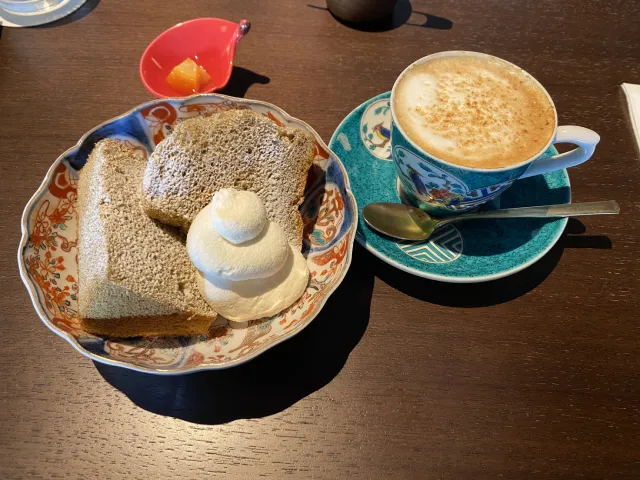
Saryo Zeze – Coffee Break in a Tatami Teahouse
A serene tea house tucked away from the park’s busiest paths. Inside, you leave your shoes at the door and step onto tatami mats surrounded by quiet gardens.
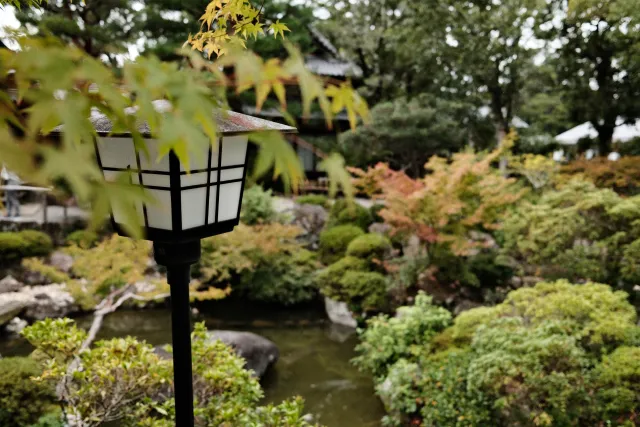
Yoshikien Garden – Free Entry for Foreign Visitors
One of Nara’s most beautiful gardens — and free for foreign visitors. It features three distinct garden styles: a moss garden, a pond garden, and a tea house garden. Because it’s less known than neighboring Isuien Garden, it remains tranquil, making it ideal for strolls, photography, or simply sitting by the pond watching koi fish glide through the water.
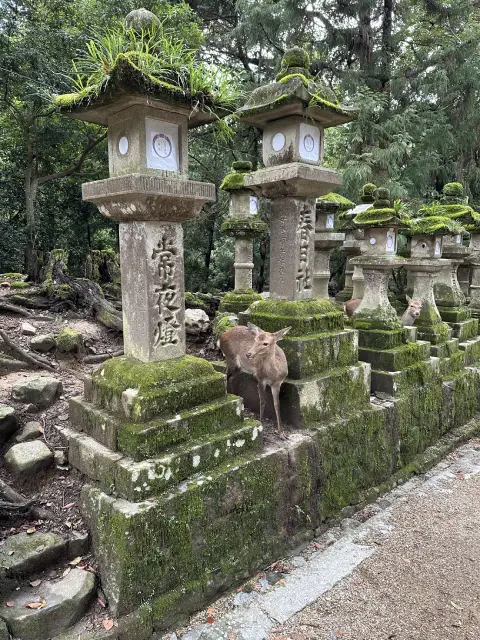
Kasuga Taisha Shrine – Ancient Lanterns & Forest Paths
A sacred Shinto shrine known for its thousands of bronze and stone lanterns lining the forest paths. During the Lantern Festivals, every lantern is lit, creating one of the most magical nighttime scenes in Japan. Even without the festival, the shrine’s deep-red buildings, hanging lanterns, and wooded surroundings feel ancient and spiritual. Deer wander here too — adding to the shrine’s mythical feel.
Return to Kyoto on the Aoniyoshi Limited Express
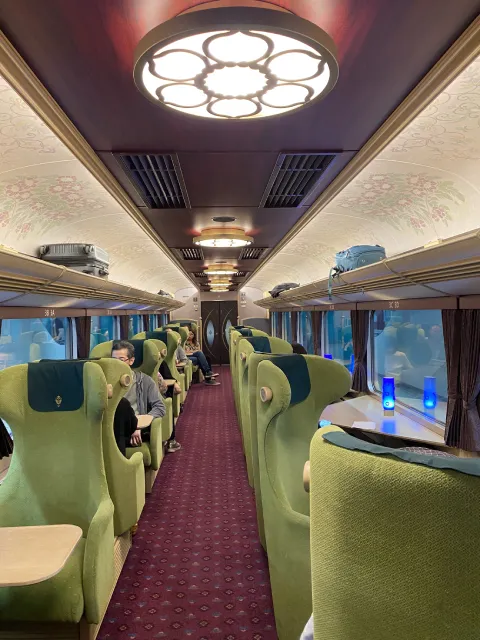
We splurged on seats aboard Aoniyoshi Limited Express train, booked online (IC card still needed for the base fare). This elegant sightseeing train features lounge-like seats, artful interiors, and wide windows perfect for taking in Nara’s countryside views. Riding it feels luxurious compared to standard commuter trains and is a relaxing way to close your Nara day trip.
More Nara Sights Worth Adding to Your List
If you have extra time (or simply want more ideas), these 5 spots are absolute standouts:
Tōdai-ji Temple
Home to the Great Buddha (Daibutsu), one of the world’s largest bronze statues, inside a massive wooden hall.
Kōfuku-ji Temple
A historic temple complex near Nara Park with a striking five-story pagoda.
Isui-en Garden
A beautifully landscaped stroll garden with two teahouses and a postcard-worthy view of Tōdai-ji’s Great South Gate.
Nara National Museum
Showcases priceless Buddhist art, sculptures, and seasonal special exhibitions.
Mount Wakakusa (Wakakusayama)
A gentle hike or short taxi ride rewards you with sweeping views of Nara City; famous for the annual Wakakusa Yamayaki grass-burning festival.
Final Thoughts
Four days split between Kyoto’s timeless streets and Nara’s peaceful forests reminded me that travel is never only about the famous landmarks—it’s about slowing down, noticing the details, and letting unexpected moments shape your experience. From sipping matcha inside a tiny teahouse to wandering through lantern-lit paths and greeting bowing deer, this route offered a beautiful balance of culture, nature, food, and reflection.
If you’re planning your own journey, treat this itinerary as a foundation—but leave space for spontaneity. Take the side street that smells of roasted chestnuts. Pause longer in a garden that feels especially quiet. Wake up early for that sunrise temple visit. Let Kyoto and Nara unfold naturally, and you’ll find that the most meaningful memories come from the moments you never planned.
Wherever your Japan adventures take you next — Tokyo, Kanazawa, Takayama, Osaka, or somewhere entirely different — I hope this guide helps you travel deeper, slower, and with more intention. Safe travels, and happy exploring.
Plan ahead for trains, wear comfy shoes, and leave space for unplanned moments—sometimes the best memories are the ones you stumble upon, just like we did at Zenkyo-an.
Frequently Asked Questions:
Is 4 days enough for Kyoto and Nara?
Yes — 4 days is an ideal amount of time to explore Kyoto’s major temples, shrines, gardens, and cultural districts while also taking a complete day trip to Nara. You’ll be able to cover top attractions like Fushimi Inari, Arashiyama, Kiyomizu-dera, Kinkaku-ji, and Nara Park without feeling rushed
What is the best time of year to visit Kyoto?
The most popular times are spring (March–April) for cherry blossoms and autumn (November) for colorful foliage. However, winter is peaceful with fewer crowds, and summer brings lively festivals like Gion Matsuri.
How do I get from Kyoto to Nara?
The fastest and most convenient option is the Kintetsu Railway (about 45 minutes). For a comfortable sightseeing experience, you can reserve seats on the Aoniyoshi Limited Express, which offers spacious seating and scenic views. JR trains are also available.
Where is the best area to stay in Kyoto for first-time visitors?
Stay near Kawaramachi/Downtown for easy access to restaurants and transportation, or in Gion/Higashiyama if you want a traditional, historical atmosphere. The Kyoto Station area is great for convenience and value.
Is Kyoto walkable?
Yes — Kyoto is very walkable, especially key districts like Gion, Higashiyama, and central Kyoto. For longer distances, buses, trains, and bicycles make getting around easy.
How early should I visit Fushimi Inari Taisha?
To enjoy the torii gates without heavy crowds, aim to arrive between 6:00 AM and 8:00 AM. The early morning lighting and quiet atmosphere make the shrine especially magical.
Do I need cash in Kyoto and Nara?
Japan is increasingly cashless, but many small shops, food stalls, and some shrines still prefer yen. It’s best to carry at least ¥5,000–¥10,000 in cash for snacks, souvenirs, and local transportation.
What should I eat in Kyoto?
Try kaiseki cuisine, shojin ryori, matcha desserts, obanzai (Kyoto-style home cooking), and Kyoto-style ramen. Don’t miss specialty cafés like % Arabica or traditional sweets from Nakamura Tokichi.
Enjoyed this guide? Share it with a friend who’s planning their next adventure!
AUTHOR

Written by Princess — Helping first-time travelers explore the world stress-free.